main_page.html about_us.html what_is_aaha_.html services.html our_doctors_1.html our_staff.html directions.html emergencies.html boarding_and_grooming.html community_service.html injured_wildlife.html to_contact_us.html
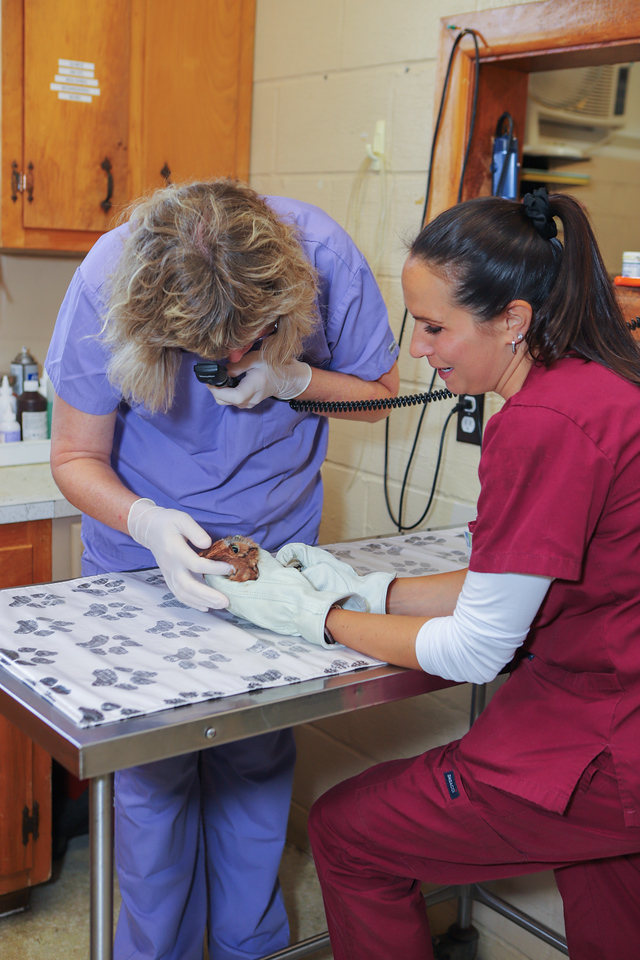
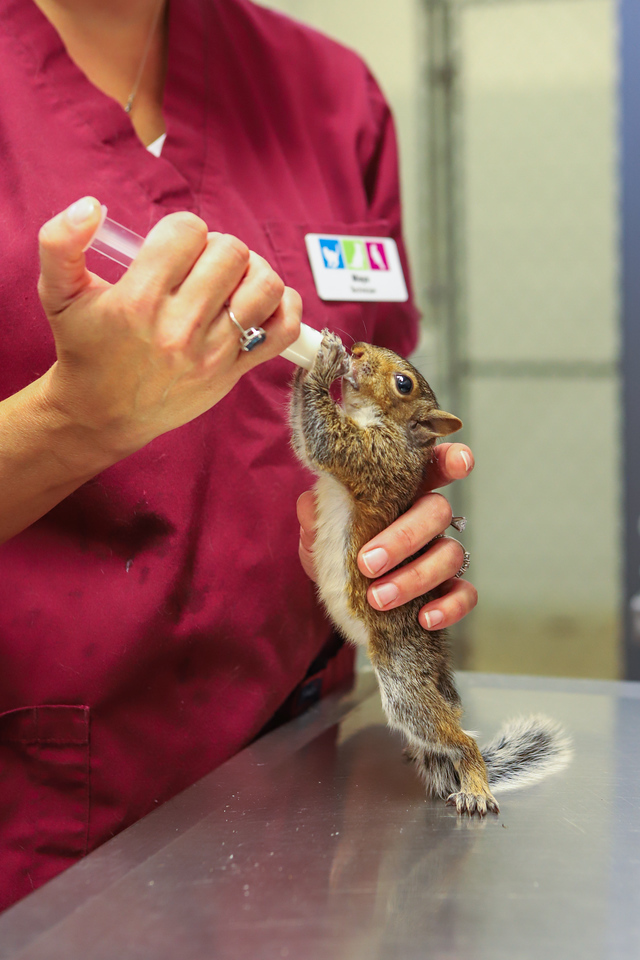
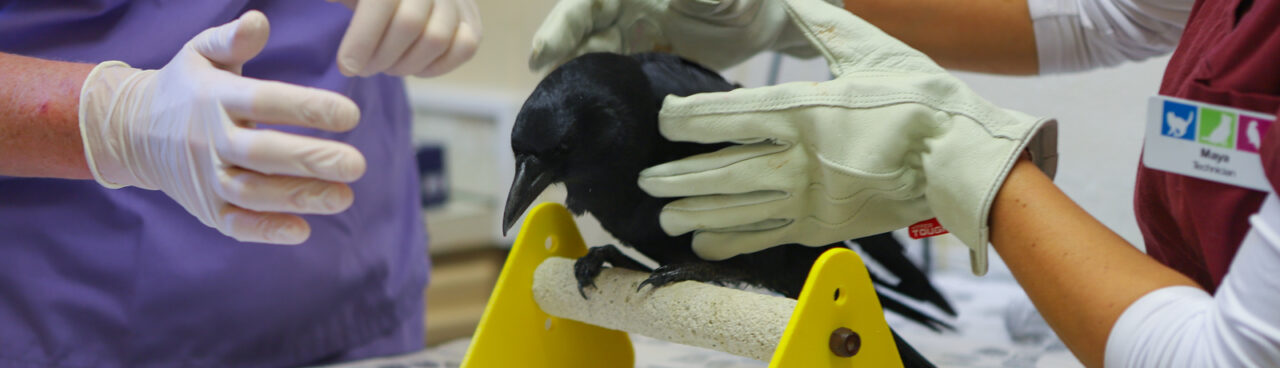
Our clinic is one of only a few veterinary hospitals in the state of Maryland licensed to treat wild and rehabilitated animals.  This is a distinction of which we are  especially proud.  We have commited our staff and resources to treat ill or injured wildlife in the hopes that they can be returned to the wild.  We work closely with federal, state and local wildlife programs and rehabilitators to ensure that these wild animals are given every chance of survival. 


As our way of promoting the health of area wildlife, we do all of this free of charge.  However, to help offset the cost of providing high-quality, state-of-the-art medical care for our local wildlife, we have estabilished a "CARING FOR WILDLIFE" fund.  Donations made to this fund are used solely to cover the costs (x-rays, anesthesia, pins/splints, bandages, medications, and food) of caring for these animals.  Our doctors and staff volunteer their time.  We seek no other compensation than seeing that these animals are humanely treated and when possible returned to the wild, placed in rehabilitation or education programs, or humanely euthanized when no other options are available.


If you wish to make a donation, you may do so when you next stop by the clinic or you may click here and print out a donation form and send it to:
                                                       Opossum Pike Veterinary Clinic
                                                       Caring for Wildlife Fund
                                                       1550 Opossumtown Pike
                                                       Frederick, MD 21701
                                                

INJURED ADULT WILDLIFE

Any animal can be dangerous when injured, but this is especially true of wild animals and birds. The teeth, claws, and talons of wild animals/ birds are very dangerous. Call the appropriate authorities, rehabilitators or our office when you find injured adult wildlife. Do not attempt to treat or rehabilitate these animals yourself. It is both dangerous and illegal. It is vital that you keep in mind that all mammals have the potential of carrying rabies. An animal does not necessarily have to bite you in order to expose you to the rabies virus.


Foxes, skunks and raccoons, notorious carriers of rabies, should by handled by licensed wildlife handlers only. If you suspect a wild animal has rabies, call the Frederick County Animal Control Center.


UNINJURED OR ORPHANED WILDLIFE

Because of limited funds and resources we are only capable of accepting ill or injured wildlife.  If you have found an orphaned wildlife baby, please contact one of the rehabilatators listed at the bottom of this page.


GUIDELINES

Below you will find information to help you decide when and whom to call when wildlife animals have been abandoned, orphaned or injured.  You will find also guidelines on when it is appropriate and inappropriate to intervene or "rescue" wildlife; what rehabilaitators and/or agencies to contact; and when you should contact our clinic.

NEVER attempt to keep a wild animal as a pet. It is not only dangerous to both you and the animal, it is also illegal to keep wild animals.


WILDLIFE BABIES

A lack of knowledge in how wild animals protect and train their young leads many humans to believe that wild babies have been abandoned or orphaned and need our assistance.  We receive hundreds of calls from concerned clients regarding what they believe are abandoned/orphaned wildlife babies. However, in most cases, the parent is in the nearby brush or treetops. You should intervene only when you know for certain that the animal is orphaned, injured or  in danger.  Contrary to popular belief, touching wild animal babies will not prevent the parent from returning to the nest and caring for their young. However to reduce stress to the animal and injury to yourself, handle these babies as little as possible and wear gloves.


BIRDS

Baby birds that are trying their wings for flight will often fall or land in the grass below their nesting area.  The parent is usually nearby and if the baby is left alone, will encourage the young bird to flight. If the bird is in an exposed and vulnerable place, observe the following guidelines:


•    If the bird is feathered and able to perch, place it back in its nest or on the nearest tree limb.

•    If the bird is feathered but cannot perch, place it in a thicket or under some nearby brush.

•    If the bird is unfeathered, gently warm it in the palm of your hands and place it back in the nest.

•    If the nest is not within reach or if the bird is injured, call either a rehabilitator or our office.


Birds of prey (such as hawks and owls), migratory birds (such as songbirds) and water­fowl (such as geese and ducks) are protected by federal law and are to be handled by licensed wildlife handlers only. It is especially dangerous to attempt to rescue young owls or hawks. The parents are very protective of their young and have been known to inflict serious injury on humans.


When dealing with these birds, call the Maryland Department of Natural Resources. Only if the bird is injured and you are unable to make contact with the DNR should you call our office.


RABBITS AND OTHER SMALL MAMMALS

To protect her nest from being discovered by preditors, the mother rabbit will avoid the nest during the daylight hours, returning during the late evening and night time to care for her young. As long as the nest of baby rabbits is not in immediate danger, it should be left alone.  If the rabbit's nest has been disturbed or damaged, try to repair the nest keeping as much of the original nest material whenever possible. Place the young back in the nest. The mother will return when she feels it is safe to do so.  Rabbits that are fully furred and able to "hop" as opposed to "scoot" are old enough to be on their own and should be left alone. If they are in a vulnerable place, remove them to a thicket or large field area.  If the rabbit is injured or cannot be returned to the nest, contact a rehabilitator or our office. Do not attempt to treat these animals on your own.

Other small mammals such as squirrels and opossums are also often found orphaned. Again contact a rehabilitator or our office if it is injured or cannot be returned to the nest.


WILDLIFE PHONE NUMBERS

Injured/Orphaned Birds & Small Mammals

Frederick Co. Animal Control ...301-694-1546

Department of Natural Resources ...1-877-463-6497

Second Chance Wildlife Rescue ...301-926-9453


Injured/Orphaned Deer

Frederick Co. Animal Control... 301-694-1546


Rabies Vector Species (Bats, Skunks, Fox, Raccoons)

Second Chance Wildlife Rescue ...301-926-9453


For Additional Information

Department of Natural Resouces ...1-877-463-6497